

Burrator Reservoir after the summer of 2026 - credit Jim Wileman for Art and Energy
Before this series of events, I hadn’t given enough thought to this beautiful reservoir! It nestles in Dartmoor’s western peatlands in a valley now long flooded since the 19th century. Its water fills the pipes for people in Plymouth. The reservoir is so much more interesting when you are there, compared to just looking at its outline on a map.
Our Land Flows, funded by a grant from Farming in Protected Landscapes in Dartmoor National Park has enabled us to learn and share more about the water cycle of the Moor. We have been asking farmers, water and peatland specialists, historians, archaeologists and the public to come together at events to share their knowledge and stories about how humans have used water from the moors over thousands of years and then comparing to our modern times. Where does our drinking water come from now? We have found out so much about the water that falls as rain and filters naturally through the peatlands and ends up in the reservoir.
At the end of October, we held the last of three events from the South West Lakes Trust Discovery Centre at Burrator. We invited a wide range of experts who joined the public to go on a walk above the reservoir, led by Sue Perry from Moorland Guides. We followed the Devonport Leat and had the opportunity to see Drakes or Plymouth Leat; the history of both are fascinating (as we heard from Stephen Luscombe at the last event in Plymouth).
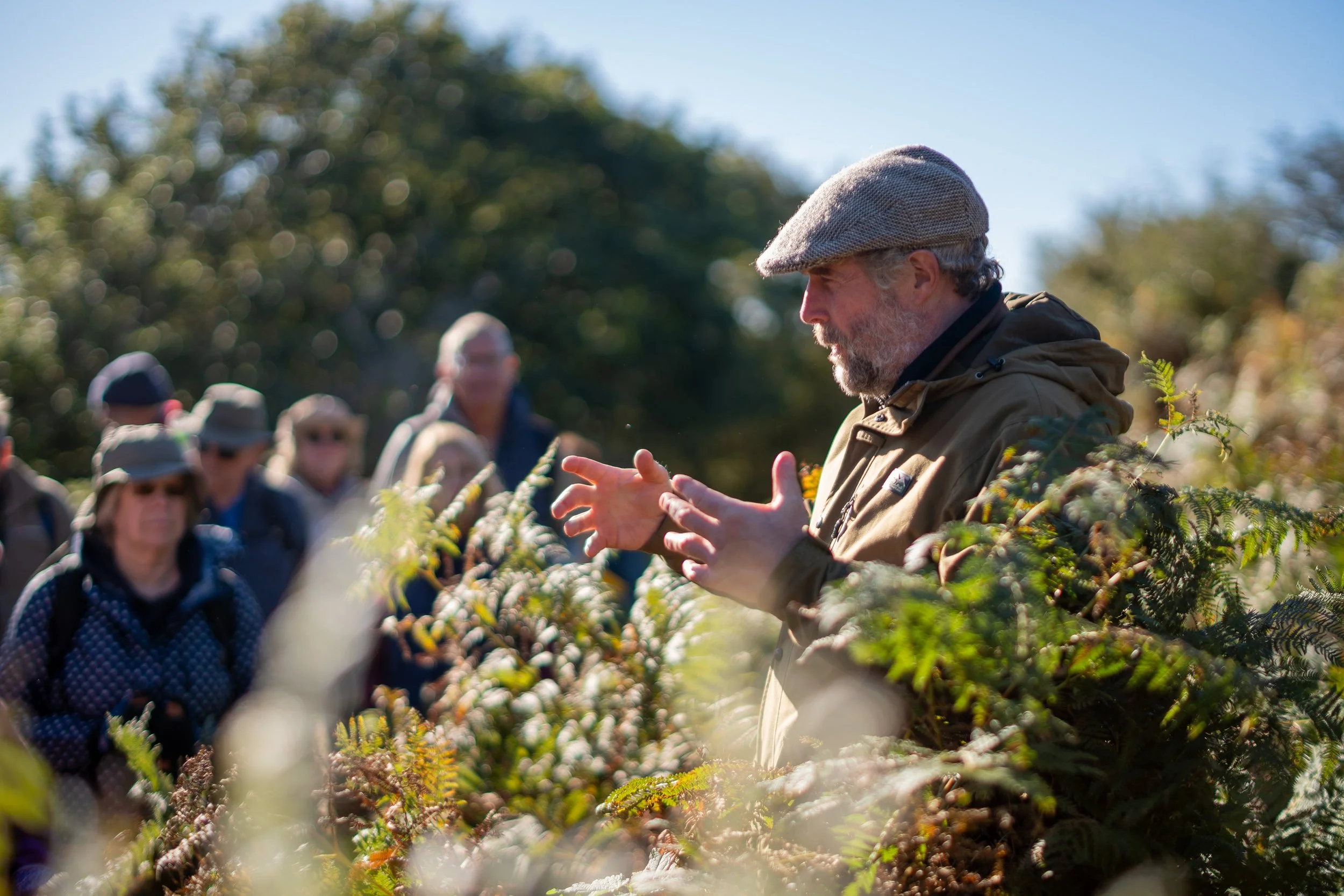
Mat explaining how he farms the commons near Burrator - credit Jim Wileman for Art and Energy
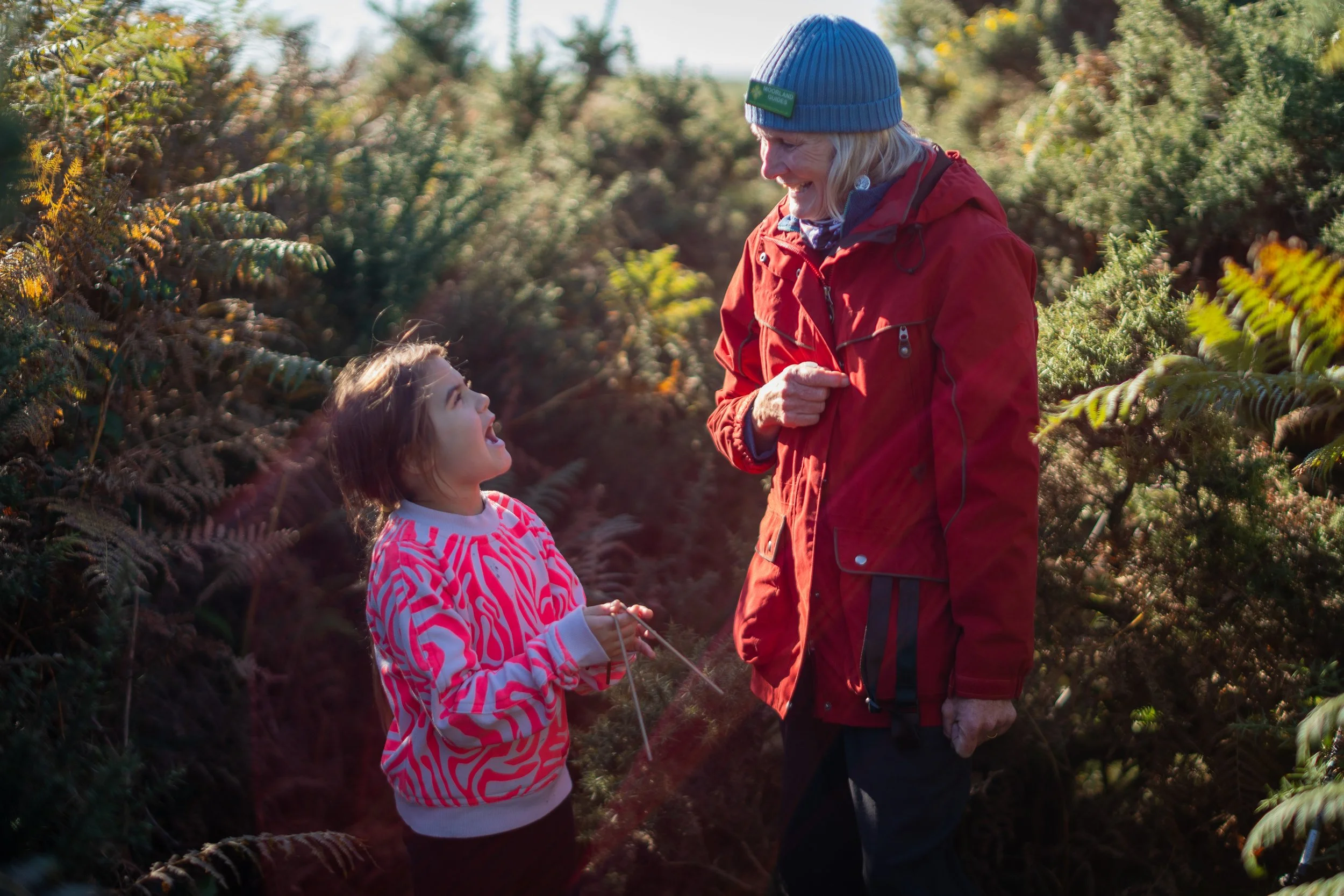
Sue Perry (our walk leader who had great information to share) with one of our younger participants having a go with water dowsing rods - credit Jim Wileman for Art and Energy
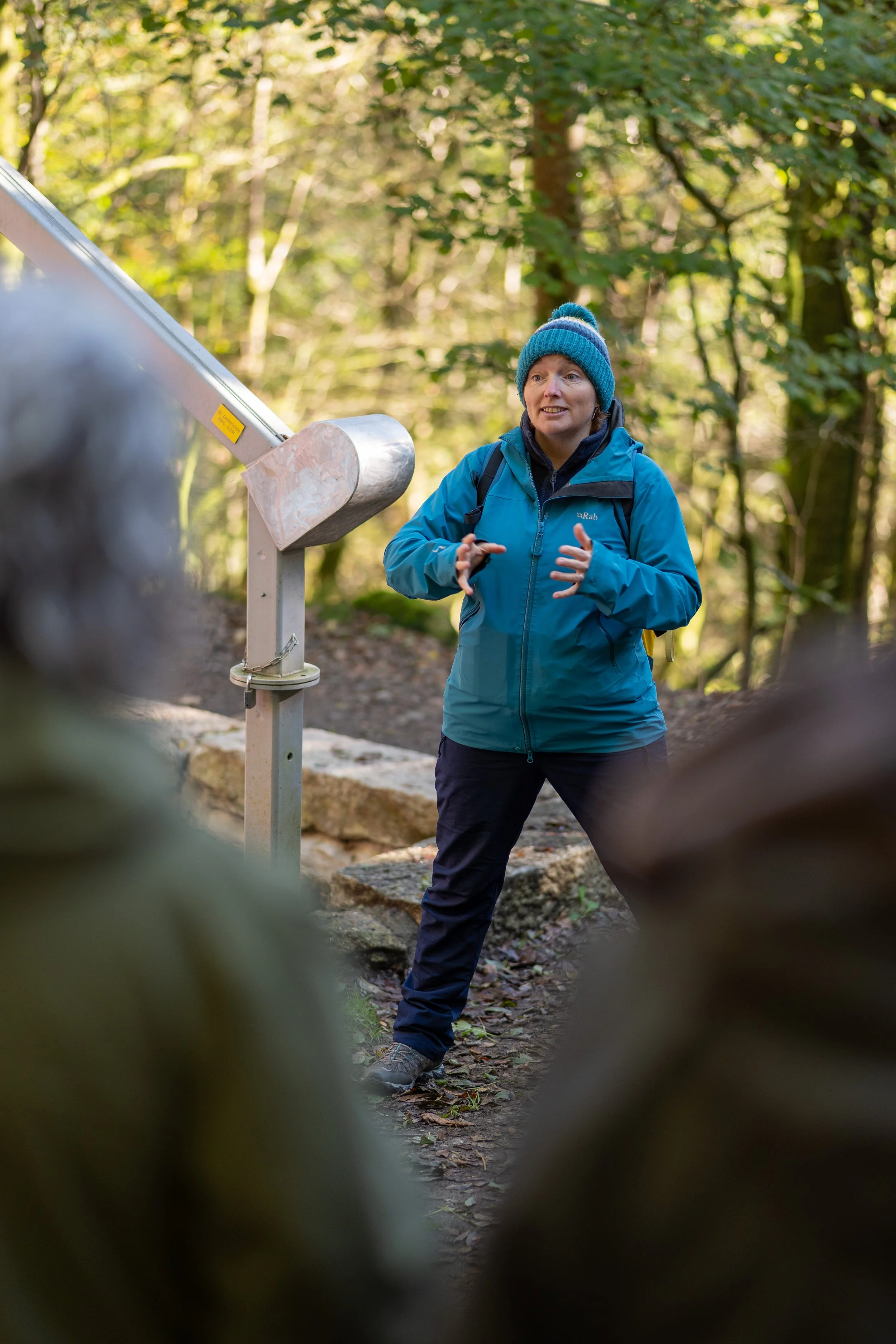
Naomi explaining where the water from the leat goes to be treated for drinking water - credit Jim Wileman for Art and Energy
Mat Cole from Greenwell Farm told us about how, if it wasn’t for the wet moorlands, his animals would have suffered in the summer of 2026. We don’t hear enough farming tales in general, and it was great to hear his perspective on managing the peat-based landscapes and commons.
Helen Bruce from Dartmoor Preservation Association explained how they have been working with volunteers keeping the old leat structures clear, so they survive to tell their crucial story of water management on the moors.
Naomi Gatis and Josie Ashe from the Centre for Research in Environment, Water and Waste (CREWW) at University of Exeter explained more to us about water pollution and the need for healthy wet peatlands that act as a filter and sponge.
Jane Akerman from IUCN UK Peatland Programme reminded us of the giant role peatlands play in resilience to climate change, slowing the flow of water.
Drew Campbell (University of Exeter PhD student) informed us about the historical role of leats across the moors and tales of public and private ownership of the water in them.
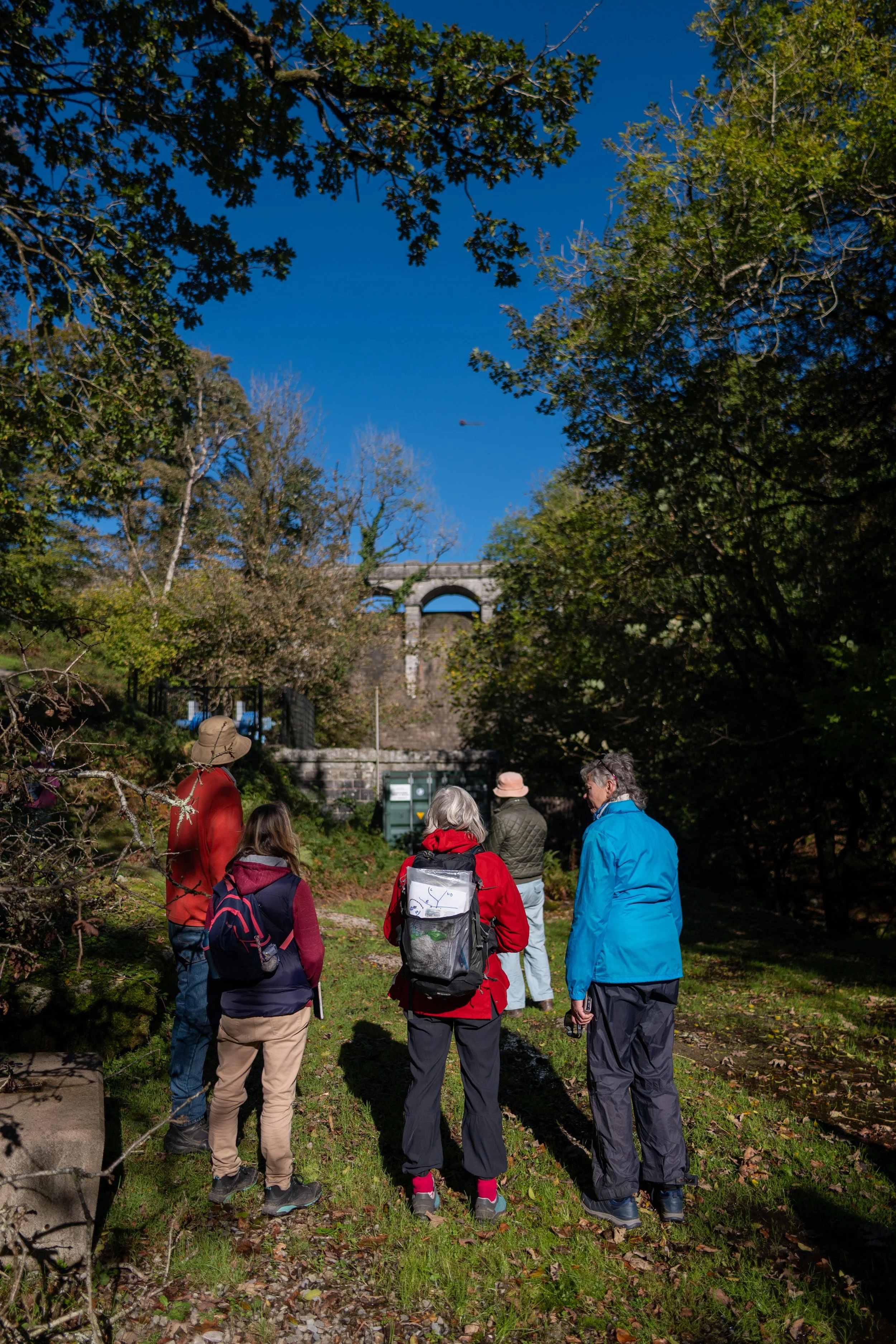
At the Burrator Reservoir dam and by Drakes Leat - credit Jim Wileman for Art and Energy
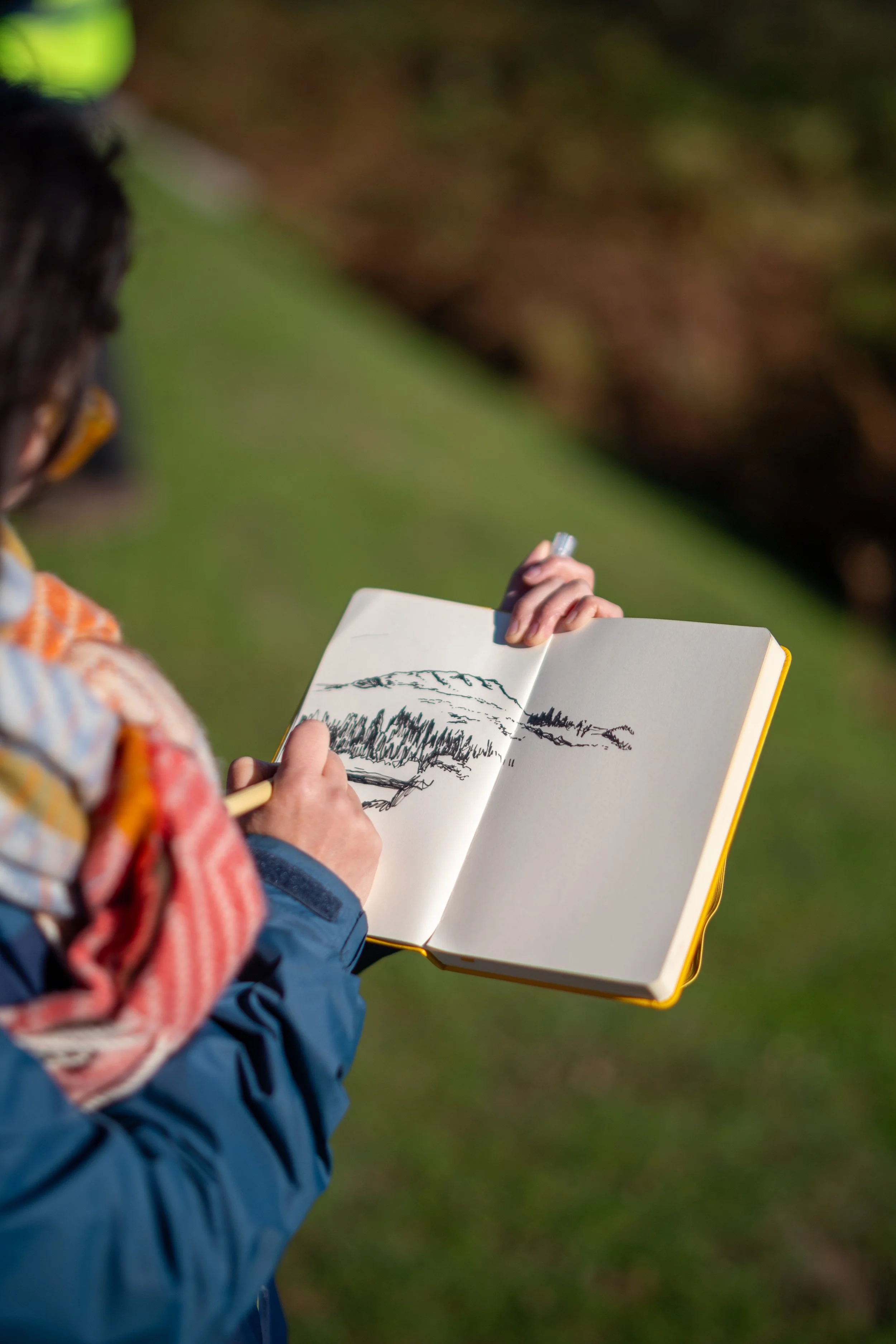
Erika Luke sketching the reservoir as she walked - credit Jim Wileman for Art and Energy
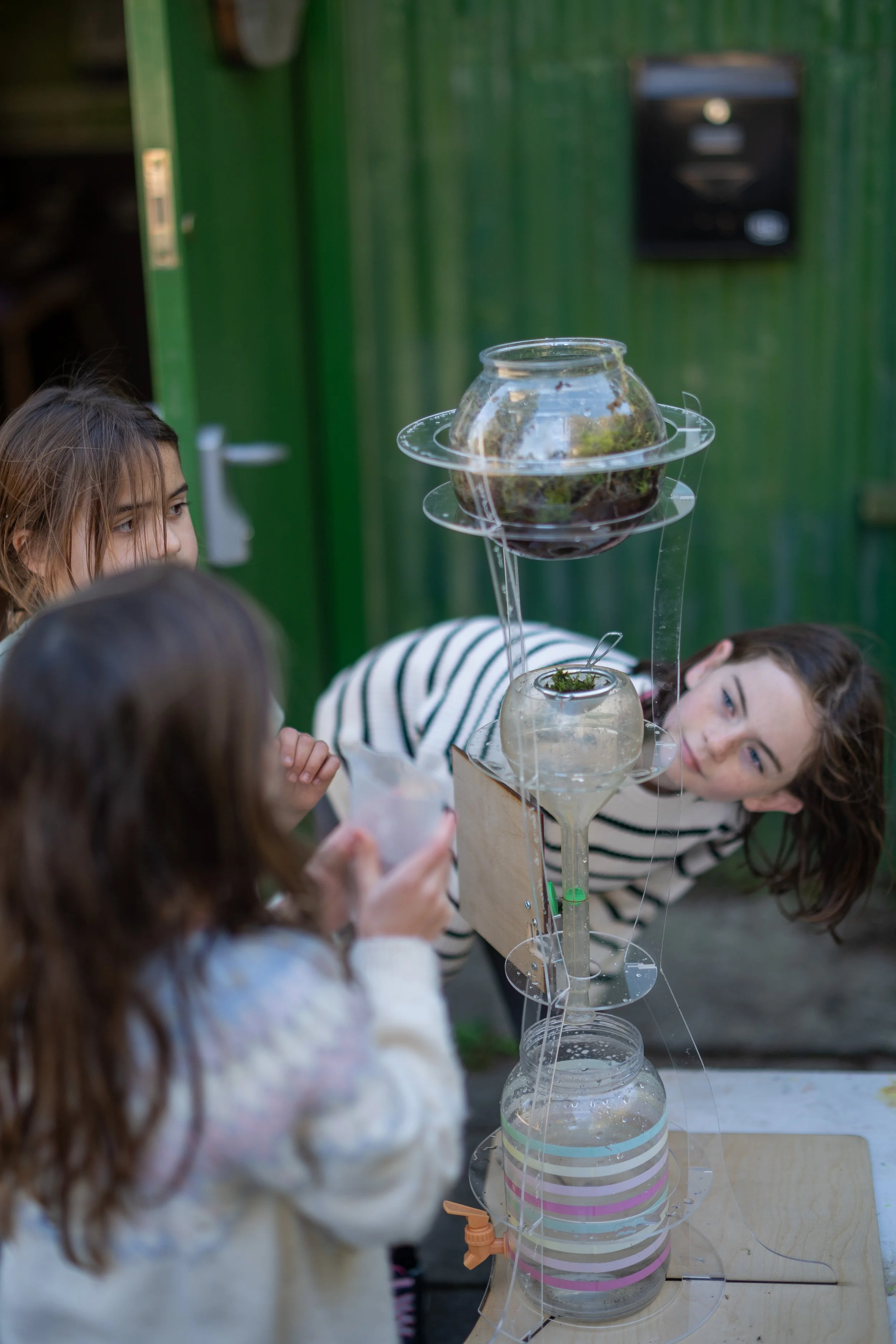
Peat to Pipe 2, our second artwork designed by Jenny Ayrton to consider where our water flows - credit Jim Wileman for Art and Energy
Back at the Discovery Centre, we invited two artists to share their perspectives on visiting and learning about Dartmoor - Samantha Webb uses puppets to tell stories, and Erica Luke sketches and then paints the experience of Dartmoor.
Art and Energy also took along some new artworks Peat to Pipe 1 & 2 to share the water cycle and the flow of water from peatlands to our taps.
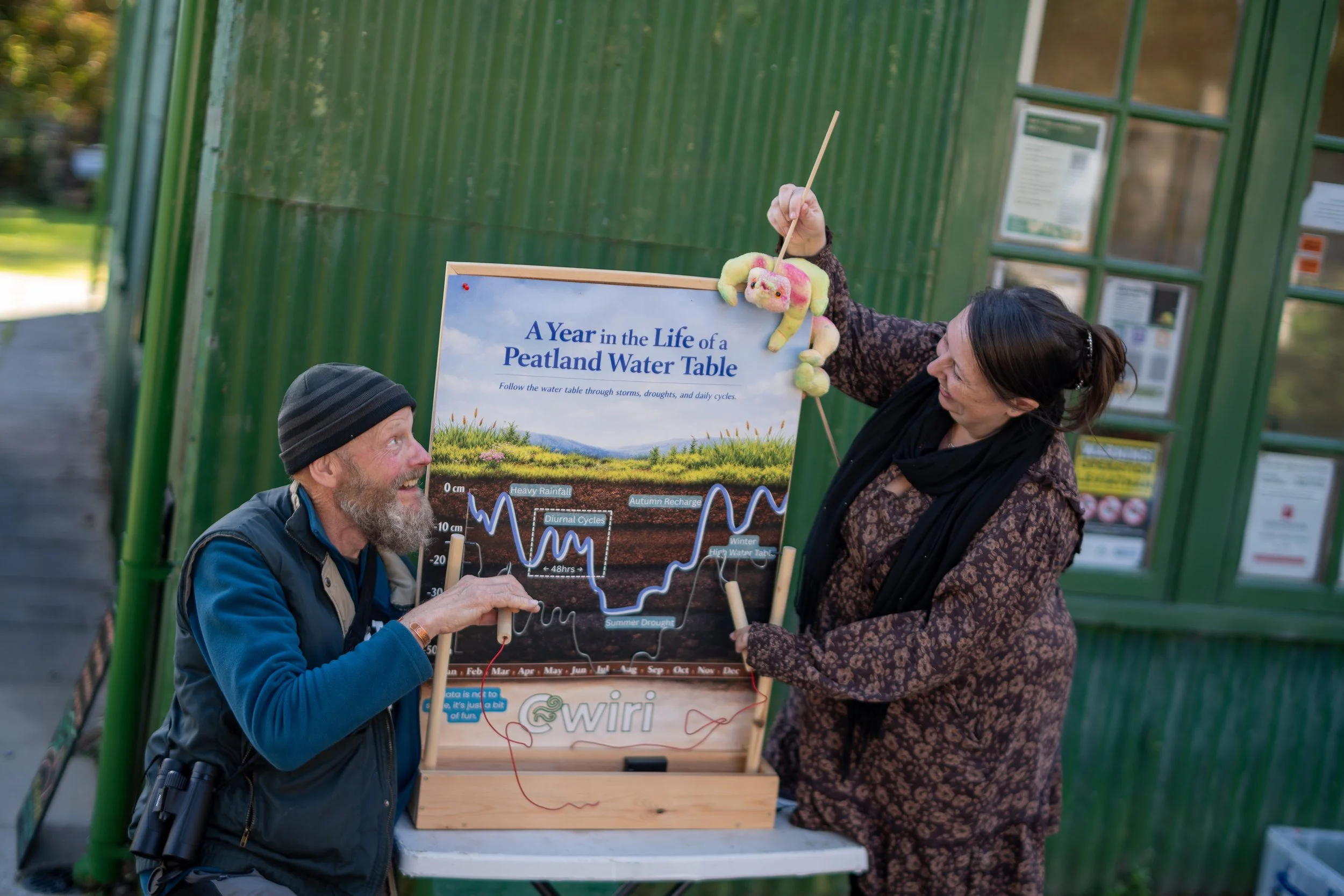
Gareth and Samantha play with a scientific peatland water game lent to us by Cwiri - credit Jim Wileman for Art and Energy
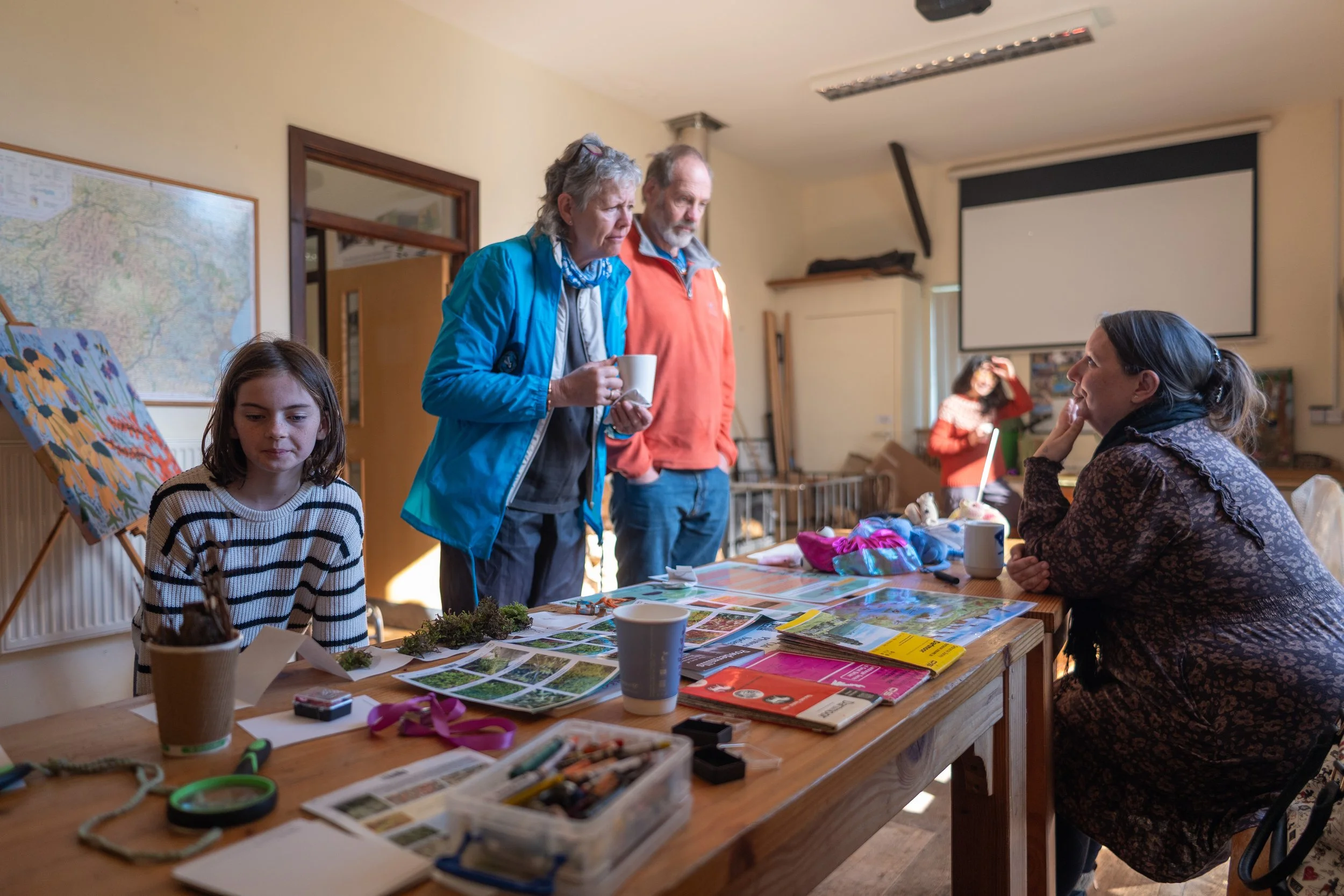
Samantha Webb and participants by the puppets - credit Jim Wileman for Art and Energy
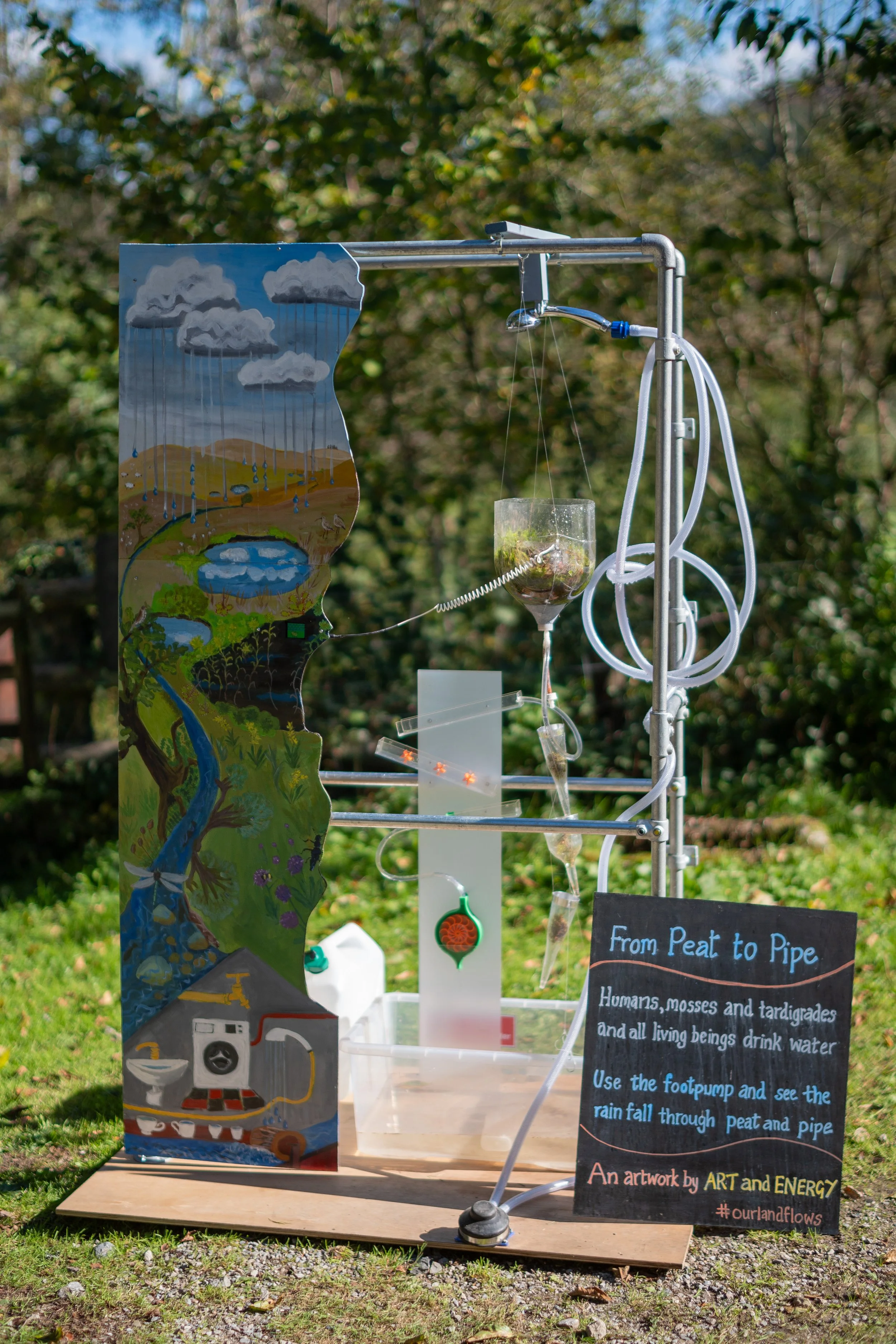
Peat to Pipe 1, using upcycled parts including an old shower head with an electronic tardigrade image enjoying the rain - credit Jim Wileman for Art and Energy
Water remains a fascinating and fulfilling, meaningful and even romantic subject to wade into. We will be returning with new events and activities to learn from and find that creative inner soul within.
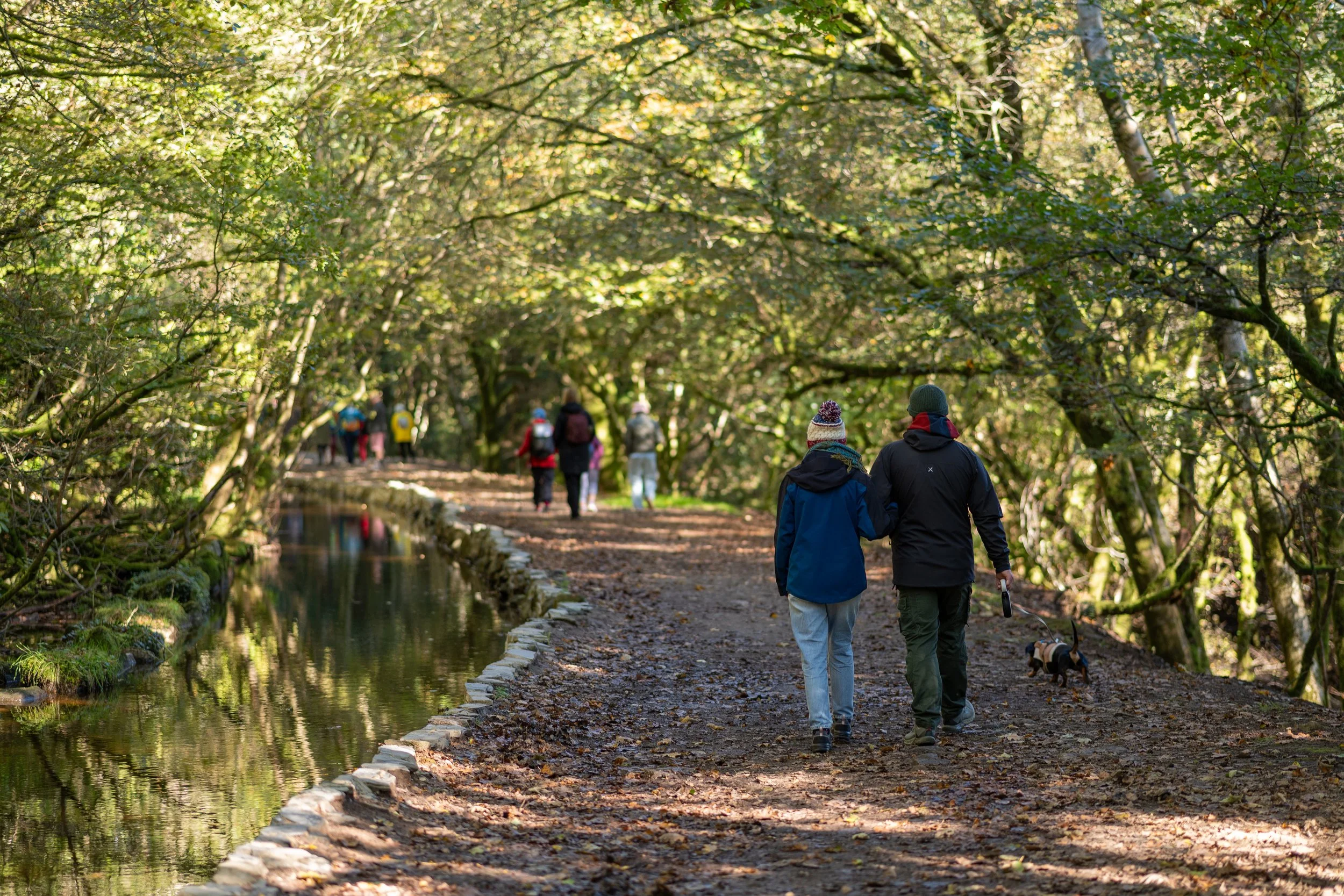
Walking beside Devonport leat above Burrator Reservoir - credit Jim Wileman for Art and Energy

In 2026, Art and Energy were awarded a Farming in Protected Landscapes (FiPL) grant from Dartmoor National Park, which explored our reliance on Dartmoor's varied landscape and habitats, from peat bogs and mires to the deep river valleys that flow with water in the natural and human formed infrastructure.
Dartmoor Preservation Association awarded Art and Energy an Access Grant towards this project for encouraging more people to help conserve this landscape heritage.
